Science Fiction
Sci-fi world-building requires visual systems that establish altered realities. The genre balances spectacle with character intimacy, using production design, lighting, and framing to create believable futures or alternate worlds. Technology and environment become visual characters.
Visual Characteristics
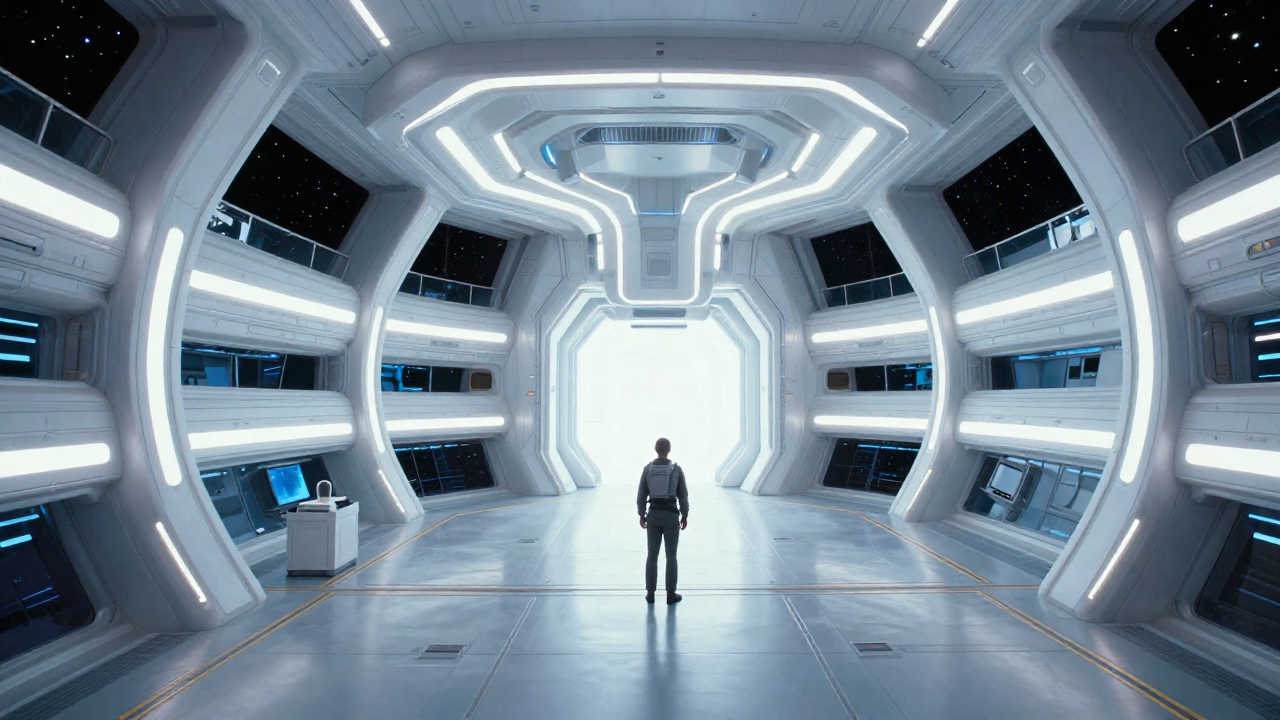
- Visual Language: Wide shots establish unfamiliar worlds and scale. Symmetrical framing suggests advanced technology or control. Clean, precise compositions for utopian futures. Gritty, layered frames for dystopias. Special attention to production design within frame. Deep focus to showcase world details.
- Lighting: Motivated by imagined technology and environments. Cool, blue-white light for sterile futures. Neon and colored practicals for cyberpunk. Natural light in post-apocalyptic settings. Harsh, artificial lighting for institutional control. Volumetric lighting and atmospheric effects.
- Color Palette: Depends on subgenre: cool blues and whites for clinical futures, warm oranges for Mars or dystopia, deep blacks for space. Color as world-building tool. Consistent color logic throughout the world. Often desaturated or hyper-saturated, rarely naturalistic.
- Pacing: Varies widely: contemplative pacing for cerebral sci-fi, rapid cutting for action. Long takes to establish world-building. Strategic use of slow motion for spectacle. Editing rhythm reflects the technological era depicted. Allow audiences time to process unfamiliar visuals.
Essential Shots
Related Genres
Ready to Apply This Technique?
Use Filmvision AI to visualize your ideas with storyboards and AI-generated imagery. Bring your screenplay to life before you shoot.
Start Free