Western
Western cinematography emphasizes vast landscapes, harsh sunlight, and the relationship between humans and frontier environments. Wide compositions establish scale and isolation. The genre uses natural elements—dust, wind, sun—as active participants in the visual storytelling.
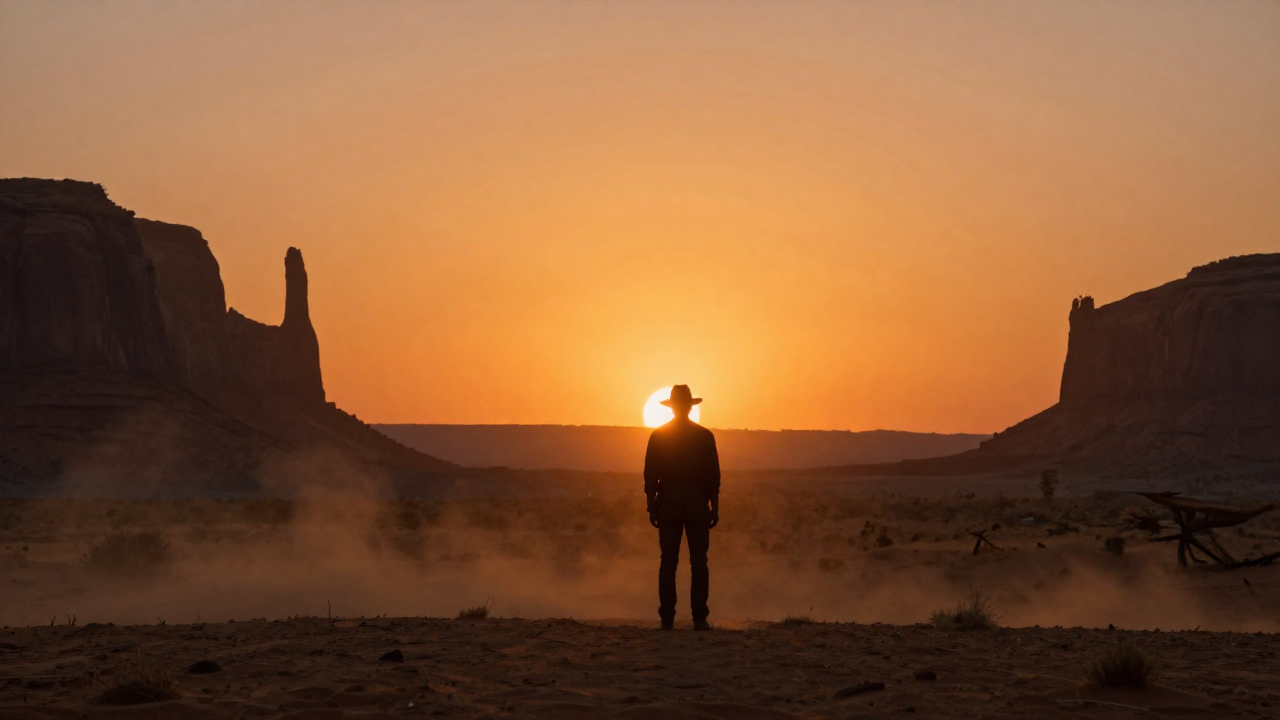
Visual Characteristics
- Visual Language: Extreme wide shots establish epic scale and isolation. Low angles emphasize heroism and power. Eye-level for authenticity. Deep focus to show environment context. Silhouettes against horizons. Static camera for contemplative moments. Dynamic coverage for action.
- Lighting: Harsh natural sunlight with minimal diffusion. High contrast in desert environments. Golden hour for romantic or nostalgic moments. Backlighting for dust and atmosphere. Practical firelight for night exteriors. Long shadows emphasizing time of day and isolation.
- Color Palette: Earth tones: ochre, brown, tan, dusty blue skies. Desaturated or warm color grading. Natural landscape colors. Costumes in blacks, browns, and leather tones. Blood red as accent. Faded, sun-bleached aesthetic for classic westerns.
- Pacing: Deliberate pacing with extended silences. Long takes for landscape appreciation and tension building. Quick cuts for gunfights and action. Strategic use of slow motion for iconic moments. Editing rhythm reflects the genre's contemplative nature punctuated by violence.
Essential Shots
Related Genres
Ready to Apply This Technique?
Use Filmvision AI to visualize your ideas with storyboards and AI-generated imagery. Bring your screenplay to life before you shoot.
Start Free